4. Benjamin owns a farm. He employs 100 workers plowing his fields. His total payroll is $10 million/year. One day, he buys a mule, which provides the worker who uses it with a modest 10 percent productivity gain. Benjamin fires 99 of his workers and purchases 99 mules, expecting a 1,000 percent productivity gain. The driverless mules cause plow damage to his property in excess of $50 million. Benjamin loses another $5 million due to the loss of productivity from his one remaining employee, who no longer guides a plow but instead spends 100 percent of his time shoveling mule shit. Goldman Sachs builds an altar to Benjamin in their lobby and cuts out the heart of a junior analyst on it every Friday. They call it “Blood Sacrifice Friday.” The name isn’t catchy, but the event becomes a management favorite nonetheless.
As I am often in contact with people from all around the world, sometimes I am asking myself: what makes a “culture” – geography, history, language, politics, belief system?
I can in principle agree with the Wikipedia definition (a bit convoluted though)…
Culture is a concept that encompasses the social behavior, institutions, and norms found in human societies, as well as the knowledge, beliefs, arts, laws, customs, capabilities, attitudes, and habits of the individuals in these groups. Culture often originates from or is attributed to a specific region or location.
World Values Survey
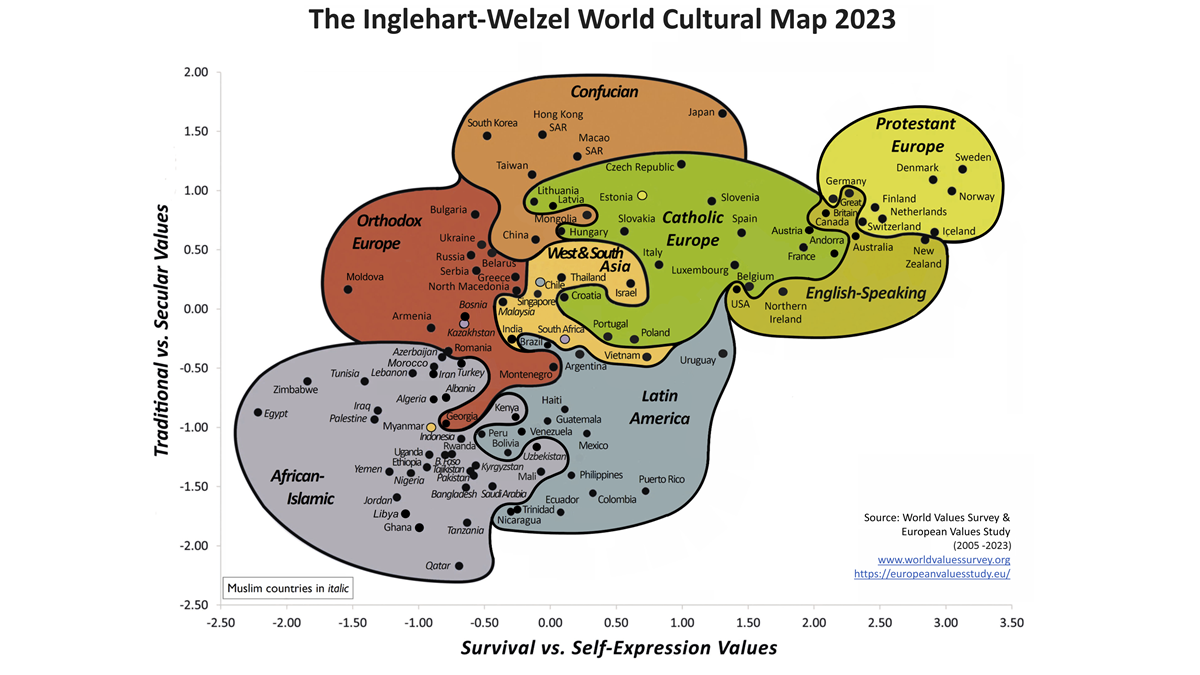
Recently I ran into the “World Values Survey” website, that really gave me a new understanding of how a culture can be defined and even compared.
The WVS has over the years demonstrated that people’s beliefs play a key role in economic development, the emergence and flourishing of democratic institutions, the rise of gender equality, and the extent to which societies have effective government.
Inglehart–Welzel Cultural Map
The map presents empirical evidence of massive cultural change and the persistence of distinctive cultural traditions. Main thesis holds that socioeconomic development is linked with a broad syndrome of distinctive value orientations. Analysis of WVS data made by political scientists Ronald Inglehart and Christian Welzel asserts that there are two major dimensions of cross cultural variation in the world:
1) Traditional values versus Secular-rational values and
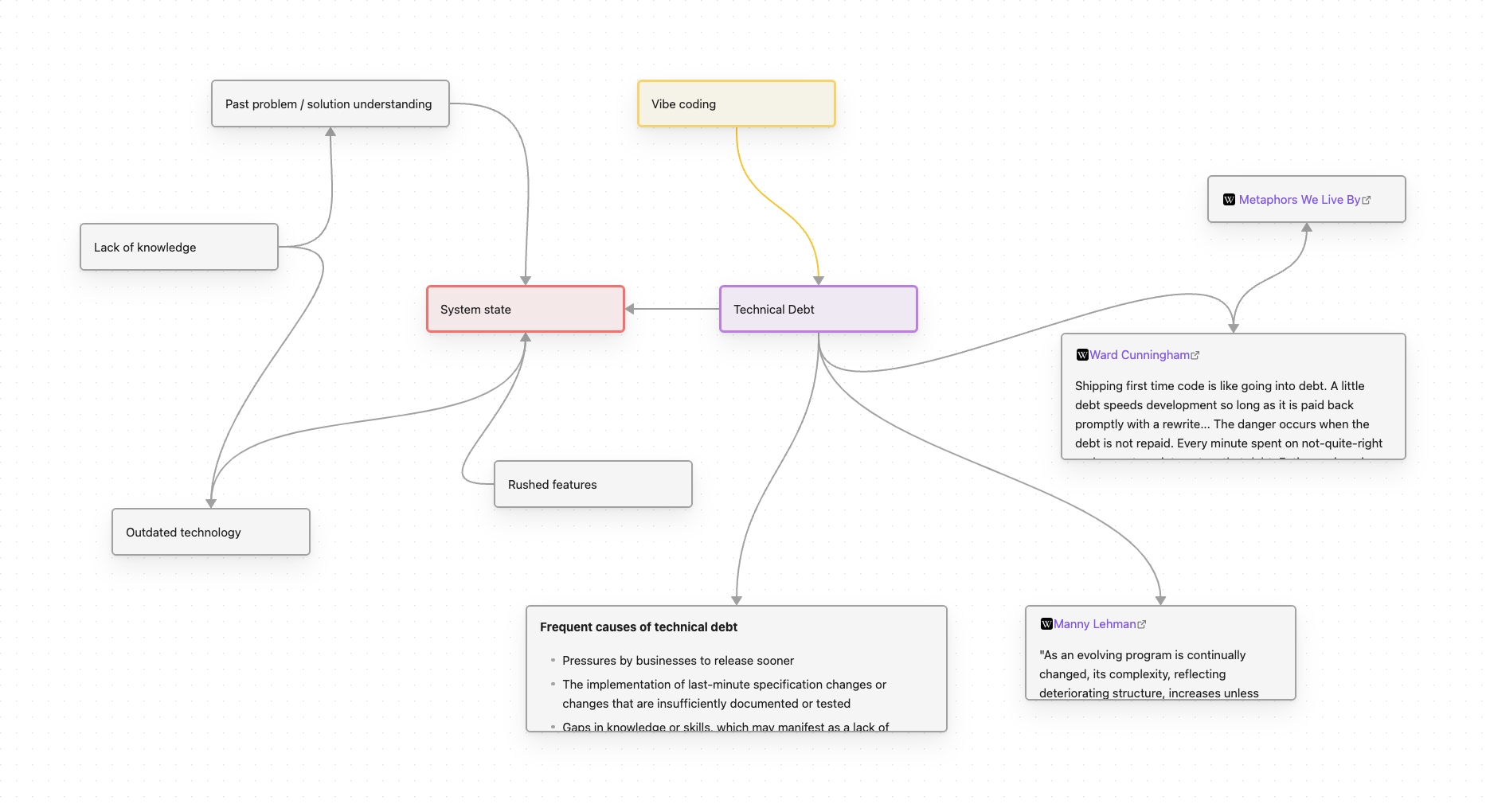
When looking at any system as-it-is, my perspective remains: tech debt is the state of a system that captured the understanding of the problem when it was created and doesn’t fully reflect today’s understanding.
The (obsolete) understanding applies to both functional and non-functional requirements, so it might be about the business, technical, scaling, or another aspect of that system (also organizational).
This might NOT help with “business” understanding what is meant by “tech debt”, but put it in terms of business understanding embodied in code, you might stand a chance to affect the roadmap.
Don’t forget – we will still produce (some) technical debt for the future as soon as the business or operational requirements change.
And, yes, vibe-coding will produce a lot of technical debt. Slop is not long-term.
Shipping first time code is like going into debt. A little debt speeds development so long as it is paid back promptly with a rewrite… The danger occurs when the debt is not repaid. Every minute spent on not-quite-right code counts as interest on that debt. Entire engineering organizations can be brought to a stand-still under the debt load of an unconsolidated implementation, object-oriented or otherwise.
… a chatbot-based approach to creating software where the developer describes a project or task to a large language model (LLM), which generates code based on the prompt. The developer does not review or edit the code, but solely uses tools and execution results to evaluate it and asks the LLM for improvements.
Let’s say you were employed as a CTO behind the front lines and you wanted to destroy productivity for as long as you can without getting caught. You can of course make a series of obviously bad decisions, but you’d get fired quickly. The real goal here is to sap the company of its productivity slowly, while maintaining a façade of plausibility and normalcy. What are some things you can do?
The devices that are taking away our attention are increasingly present in our daily lives. Smartphones, tablets, watches, glasses. This alters human behavior, altering the language as well.
I read a lot of content on my phone, and started to notice how much I am redirected around. This is something one usually doesn’t notice on a computer, since the connection is much faster, and I guess the browser renders in a different way.
Privacy & Cookies: This site uses cookies. By continuing to use this website, you agree to their use. To find out more, including how to control cookies, see here: Cookie Policy.