
I’m sure I would have to learn a ton of stuff to be able to use this effectively, but I love the idea and the design.

Analog Paradigm presents a modern open source, educational, low-cost analog computer.
Source: THE ANALOG THING
I’m sure I would have to learn a ton of stuff to be able to use this effectively, but I love the idea and the design.
Analog Paradigm presents a modern open source, educational, low-cost analog computer.
Source: THE ANALOG THING
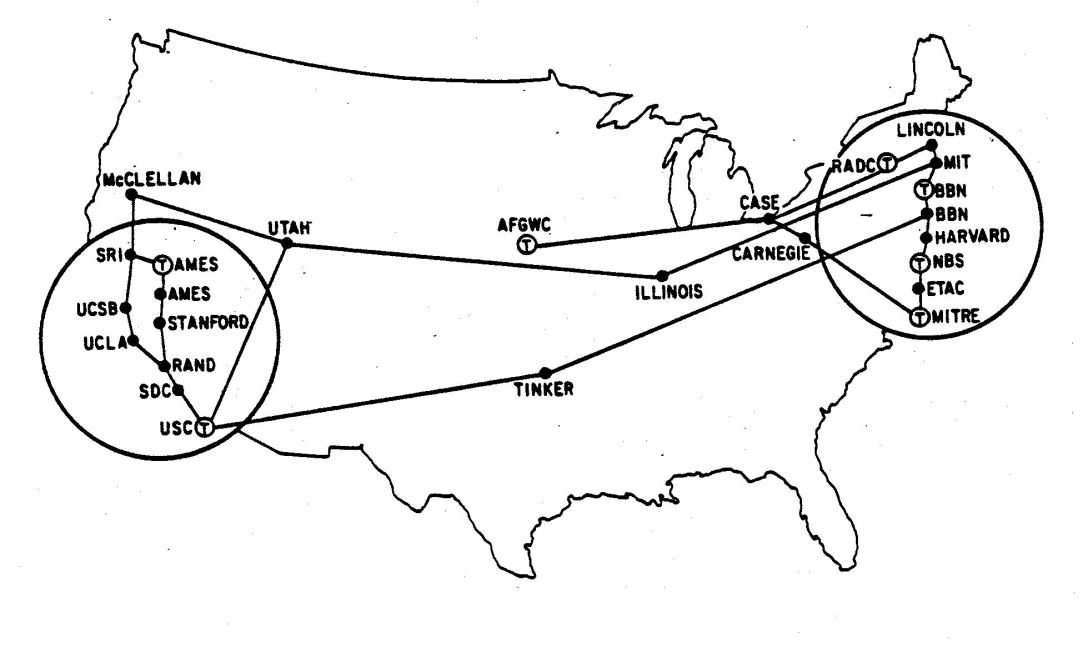
This page provides a single entry point to all the posts in the story of how the world got online. The Backbone: Introduction One System, Universal Service? The Unraveling, Part 1 Discovering Inter…
Super interesting details on internet (standards) beginnings.
Commenting on one RFC a day in honor of the 50th anniversary of the first RFC.
Source: 365 RFCs — Write.as

Turns out, a lot of it, actually.
Source: How Much of the Internet Is Fake?
—
The article is from 2018, and I have to confess I didn’t look for more recent statistics, but I can imagine it only got worse. I did a quick of search on this topic, and a lot of articles date from 2018, so it seems the attention just turned to other topics, but I don’t think the actual problem went away.
The Fake Web: How Nonhuman, Fraudulent And Invalid Traffic Is Taking Over The Internet (18 Feb 2022)
The ‘Dead-Internet Theory’ Is Wrong but Feels True – The Atlantic (31 Aug 2021)
All the levels of redirection (Rant 14 Sep 2012)
~
A terminal interface for exploring and arranging tabular data.
Wired:
Tired:
https://www.visidata.org/docs/group/
Collection of thinking tools and frameworks to help you solve problems, make decisions and understand systems.

Original post: https://sive.rs/slow
Quotes:
I’m a disappointing person to try to debate or attack. I just have nothing to say in the moment, except maybe, “Good point.” Then a few days later, after thinking about it a lot, I have a response.
People say that your first reaction is the most honest, but I disagree. Your first reaction is usually outdated. Either it’s an answer you came up with long ago and now use instead of thinking, or it’s a knee-jerk emotional response to something in your past.
When you’re less impulsive and more deliberate like this, it can be a little inconvenient for other people, but that’s OK. Someone asks you a question. You don’t need to answer. You can say, “I don’t know,” and take your time to answer after thinking. Things happen. Someone expects you to respond. But you can say, “We’ll see.”

“a pocket sized AR device for the imaginative hacker”
A new packaging for AR et.al.
Source: https://www.brilliantmonocle.com/

With the flood of AI generated imagery, can we still distinguish what is real and what is “fake”? Is it really fake if it was generated by an algorithm?
This website shows a new face every time it is loaded, and that person does not actually exist. It’s using StyleGAN2 and was created in 2019, but I ran into this again and was fascinated (again).
With each load, a new face is shown, and that person does not actually exist. This was created in 2019, but I ran into this again and was fascinated (again).
It is actually still a very good algorithm, very few flaws, at least to my untrained eye (see how can you tell below).
https://thispersondoesnotexist.com/
Reverse identification of images used to train models.
Search 5.8 billion images used to train popular AI art models
http://www.whichfaceisreal.com/
Our aim is to make you aware of the ease with which digital identities can be faked, and to help you spot these fakes at a single glance.
https://www.whichfaceisreal.com/learn.html
TLDR; Potential tell offs
https://www.stableattribution.com/
Stable Attribution’s algorithm decodes an image generated by an A.I. model into the most similar examples from the data that the model was trained with.
The term “Normal accident” really caught my attention – how can an accident be normal?
Are complex software systems, especially ones with technical debt and many knowledge transfers, destined to have (catastrophic) failures?
Find below some quotes from the related Wikipedia articles (emphasis mine) and the reference.
—-
A system accident (or normal accident) is an “unanticipated interaction of multiple failures” in a complex system.
This complexity can either be of technology or of human organizations, and is frequently both.
A system accident can be easy to see in hindsight, but extremely difficult in foresight because there are simply too many action pathways to seriously consider all of them.
Charles Perrow first developed these ideas in the mid-1980s. William Langewiesche in the late 1990s wrote, “the control and operation of some of the riskiest technologies require organizations so complex that serious failures are virtually guaranteed to occur.“
Safety systems themselves are sometimes the added complexity which leads to this type of accident.
Once an enterprise passes a certain point in size, with many employees, specialization, backup systems, double-checking, detailed manuals, and formal communication, employees can all too easily recourse to protocol, habit, and “being right.” …
In particular, it is a mark of a dysfunctional organization to simply blame the last person who touched something.
Perrow identifies three conditions that make a system likely to be susceptible to Normal Accidents. These are:
en.wikipedia.org/wiki/System_accident