Tag: code

  • Technical debt and vibe-coding

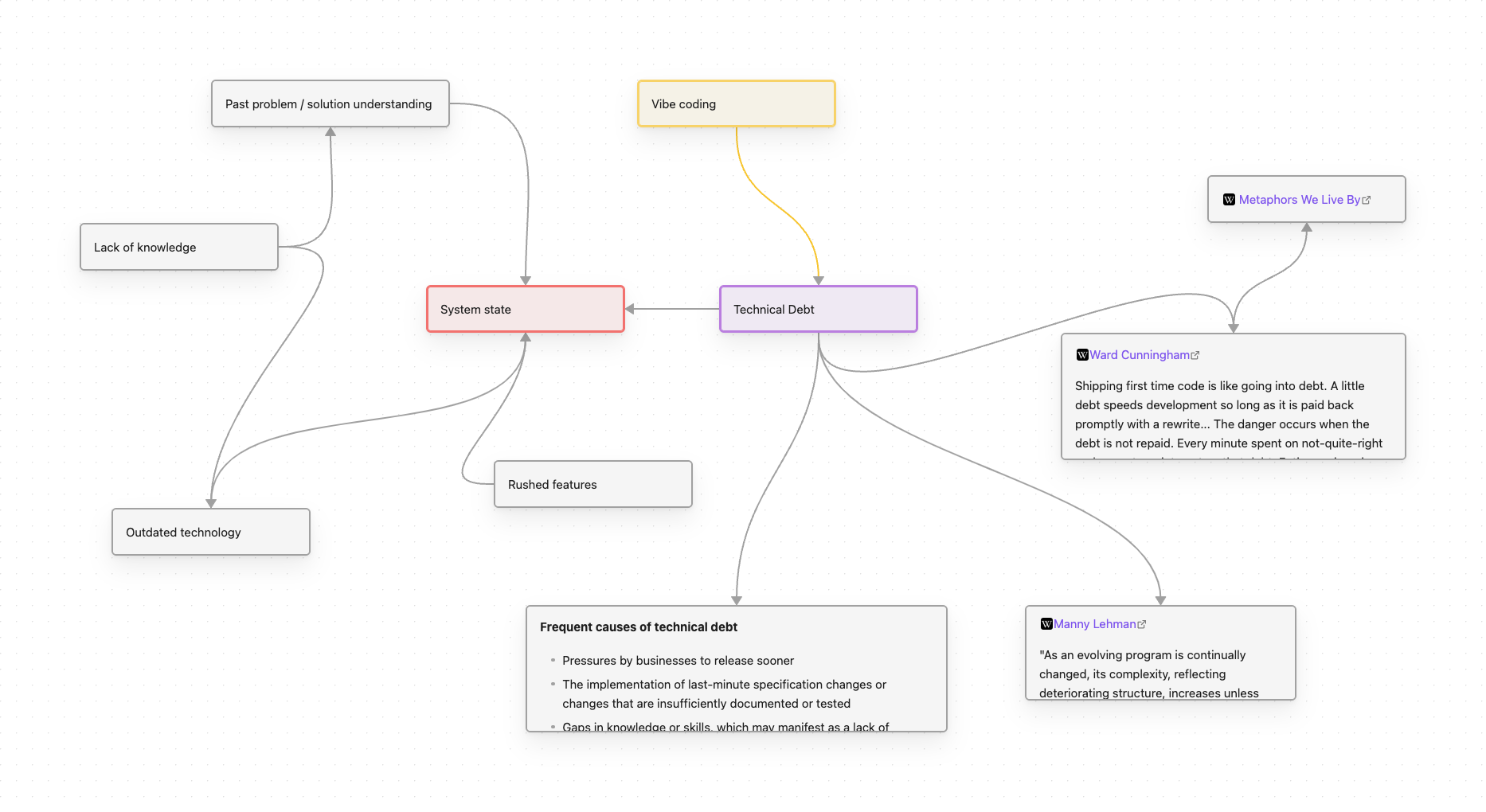
    When looking at any system as-it-is, my perspective remains: tech debt is the state of a system that captured the understanding of the problem when it was created and doesn’t fully reflect today’s understanding.

    The (obsolete) understanding applies to both functional and non-functional requirements, so it might be about the business, technical, scaling, or another aspect of that system (also organizational).

    This might NOT help with “business” understanding what is meant by “tech debt”, but put it in terms of business understanding embodied in code, you might stand a chance to affect the roadmap.

    Don’t forget – we will still produce (some) technical debt for the future as soon as the business or operational requirements change.

    And, yes, vibe-coding will produce a lot of technical debt. Slop is not long-term.

    ◆

    Inspired by the exchange on LinkedIn.

    Knowledge map
    Additional references

    Quote: Technical Debt

    Shipping first time code is like going into debt. A little debt speeds development so long as it is paid back promptly with a rewrite… The danger occurs when the debt is not repaid. Every minute spent on not-quite-right code counts as interest on that debt. Entire engineering organizations can be brought to a stand-still under the debt load of an unconsolidated implementation, object-oriented or otherwise.

    — Ward Cunningham

    https://en.wikipedia.org/wiki/Technical_debt

    https://de.wikipedia.org/wiki/Technische_Schulden (German article is quite different and worth reading)

    Quote: Vibe coding

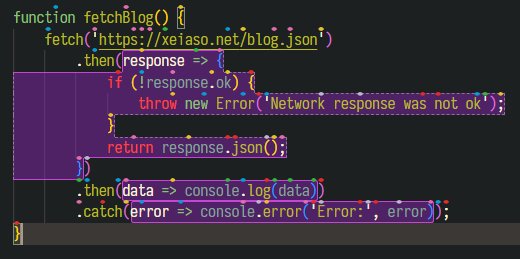
    … a chatbot-based approach to creating software where the developer describes a project or task to a large language model (LLM), which generates code based on the prompt. The developer does not review or edit the code, but solely uses tools and execution results to evaluate it and asks the LLM for improvements.
    https://en.wikipedia.org/wiki/Vibe_coding

  • First online article on technical debt

    Ward Cunningham introduced the metaphor underlying the term technical debt in a 1992 experience report, where he described how his company incrementally extended a piece of financial software:

    Shipping first time code is like going into debt. A little debt speeds development so long as it is paid back promptly with a rewrite. Objects make the cost of this transaction tolerable.

    The danger occurs when the debt is not repaid. Every minute spent on not-quite-right code counts as interest on that debt. Entire engineering organizations can be brought to a stand-still under the debt load of an unconsolidated implementation, object- oriented or otherwise.


    https://c2.com/doc/oopsla92.html

    via

    https://ieeexplore.ieee.org/stamp/stamp.jsp?tp=&arnumber=10109339 (PDF)

  • ribosome (A simple generic code generation tool)

    A simple generic code generation tool

    Source: ribosome

  • git – duplicate a repo without forking

    mkdir foo; cd foo 
    # move to a scratch dir
    
    git clone --bare https://github.com/exampleuser/old-repository.git
    # Make a bare clone of the repository
    
    cd old-repository.git
    git push --mirror https://github.com/exampleuser/new-repository.git
    # Mirror-push to the new repository
    
    cd ..
    rm -rf old-repository.git  
    # Remove our temporary local repository
    
    https://stackoverflow.com/questions/6613166/how-to-duplicate-a-git-repository-without-forking
  • Convert XML to JSON using XSLT

    Convert XML to JSON using XSLT

    With increasing use of separate services on the same data, the need for portable data formats aroused. XML was one of the first widely used, but lately JSON is blooming.

    I don’t have a particular bias here, both serve well in appropriate environment, although JSON carrying the same data could result in about 20% size reduction.

    So can they be interchangeable? Just recently, I needed to convert XML data into a JSON format for easier consumption on the client.

    The fastest and (sometimes) easiest way to process XML to another format is XSLT.

    (more…)
  • Once upon a browser

    Once upon a browser

    Once upon a browser is a bookmarklet you can use to randomly rotate elements on the page.

    (more…)
  • Evolution Of The JavaScript Loop

    Evolution Of The JavaScript Loop

    Doing a bit of testing last week, I have found out that the source code for the Game Of Life JavaScript Implementation is not working with Internet Explorer 7 (IE7).

    It turns out that IE7 doesn’t support the forEach construct, and in while rewriting it, I noticed how the code becomes so much uglier and less readable, which led me to think about the programming language evolution.

    (more…)
  • Game Of Life JavaScript Implementation

    Game Of Life JavaScript Implementation

    Recently I have come across my old implementation of Conway’s Game Of Life in JavaScript I have played with a few years ago, had a long look and I didn’t like it.
    At all.

    (more…)