Super interesting details on internet (standards) beginnings.
Commenting on one RFC a day in honor of the 50th anniversary of the first RFC.
Source: 365 RFCs — Write.as
Super interesting details on internet (standards) beginnings.
Commenting on one RFC a day in honor of the 50th anniversary of the first RFC.
Source: 365 RFCs — Write.as
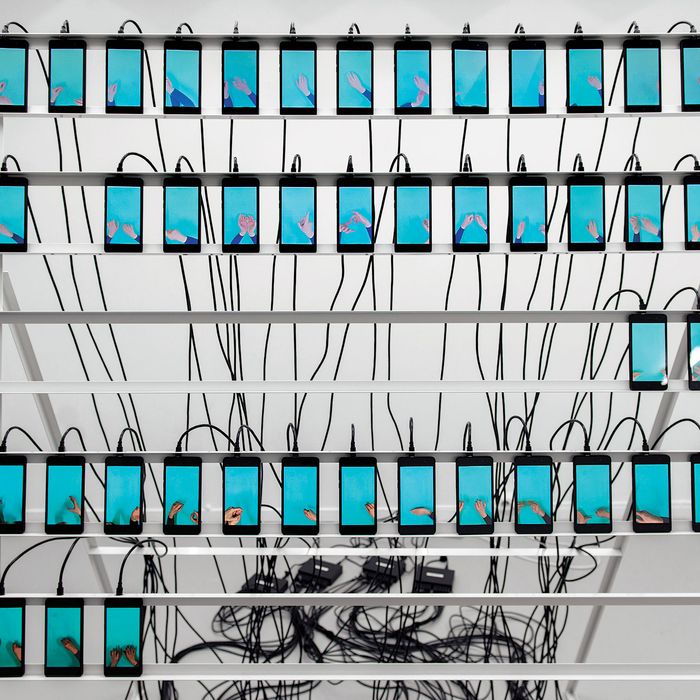
Turns out, a lot of it, actually.
Source: How Much of the Internet Is Fake?
—
The article is from 2018, and I have to confess I didn’t look for more recent statistics, but I can imagine it only got worse. I did a quick of search on this topic, and a lot of articles date from 2018, so it seems the attention just turned to other topics, but I don’t think the actual problem went away.
The Fake Web: How Nonhuman, Fraudulent And Invalid Traffic Is Taking Over The Internet (18 Feb 2022)
The ‘Dead-Internet Theory’ Is Wrong but Feels True – The Atlantic (31 Aug 2021)
All the levels of redirection (Rant 14 Sep 2012)
~

With the flood of AI generated imagery, can we still distinguish what is real and what is “fake”? Is it really fake if it was generated by an algorithm?
This website shows a new face every time it is loaded, and that person does not actually exist. It’s using StyleGAN2 and was created in 2019, but I ran into this again and was fascinated (again).
With each load, a new face is shown, and that person does not actually exist. This was created in 2019, but I ran into this again and was fascinated (again).
It is actually still a very good algorithm, very few flaws, at least to my untrained eye (see how can you tell below).
https://thispersondoesnotexist.com/
Reverse identification of images used to train models.
Search 5.8 billion images used to train popular AI art models
http://www.whichfaceisreal.com/
Our aim is to make you aware of the ease with which digital identities can be faked, and to help you spot these fakes at a single glance.
https://www.whichfaceisreal.com/learn.html
TLDR; Potential tell offs
https://www.stableattribution.com/
Stable Attribution’s algorithm decodes an image generated by an A.I. model into the most similar examples from the data that the model was trained with.
https://github.com/ArchiveBox/ArchiveBox
ArchiveBox is a powerful, self-hosted internet archiving solution to collect, save, and view sites you want to preserve offline.
You can set it up as a command-line tool, web app, and desktop app (alpha), on Linux, macOS, and Windows.
You can feed it URLs one at a time, or schedule regular imports from browser bookmarks or history, feeds like RSS, bookmark services like Pocket/Pinboard, and more. See input formats for a full list.
It saves snapshots of the URLs you feed it in several formats: HTML, PDF, PNG screenshots, WARC, and more out-of-the-box, with a wide variety of content extracted and preserved automatically (article text, audio/video, git repos, etc.). See output formats for a full list.
The goal is to sleep soundly knowing the part of the internet you care about will be automatically preserved in durable, easily accessible formats for decades after it goes down.
 I’ve got a Util folder where I keep some utilities, most of them are web-development related, others coming from *nix systems and sorely missing on windows, and some that I made.

The devices that are taking away our attention are increasingly present in our daily lives. Smartphones, tablets, watches, glasses. This alters human behavior, altering the language as well.
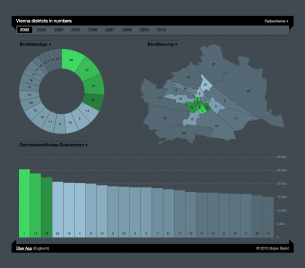
Vienna districts in numbers is an data visualization application, written in JavaScript, based on the open data. Here’s a bit about how this came to be. (more…)